Feet are easy to overlook — until something goes wrong. In care homes, foot problems are incredibly common, yet they’re often under-recognised and under-treated. For many residents, issues with their feet aren’t just uncomfortable; they can affect mobility, independence, dignity, and overall quality of life.
Ageing, frailty, long-term health conditions, reduced circulation, and difficulty with self-care all combine to make older people particularly vulnerable to foot problems. Add to that the reality that routine podiatry is not consistently provided by the NHS, and it’s easy to see why so many residents struggle.
As podiatrists working in care homes every day, we see the same conditions repeatedly. In this blog, we’ve outlined the top five foot conditions found in care home residents, why they matter, and how appropriate podiatry care can prevent small problems from becoming serious ones.
These foot conditions are among the most common foot problems seen in care homes across the UK, particularly where regular podiatry input is limited
In care homes, foot problems are incredibly common, yet they’re often under-recognised and under-treated
1. Thick toe nails (Onychauxis)
Thickened toenails are one of the most common problems we see in care homes. Known medically as onychauxis, this condition causes nails to grow harder, denser, and more difficult to cut. It’s often linked with age, long-term trauma to the nail, or reduced circulation — all of which are common in older people.
For residents, thick nails can be far more than a cosmetic nuisance. They can press painfully against footwear, cause pressure sores on neighbouring toes, or make walking uncomfortable. Left unmanaged, they can also trap debris or become fungal, further complicating care.
The challenge is that most residents can’t manage these nails themselves — and care staff aren’t trained or equipped to cut them safely. Without regular podiatry, nails are often left to grow longer and thicker until they become a real barrier to comfort and mobility.
How do we treat it?
Podiatrists use specialist instruments to safely thin and reshape thick nails, immediately relieving pressure and reducing pain. Regular visits help to keep nails manageable and prevent complications. In some cases, podiatrists may also recommend antifungal treatment or protective padding if nails are rubbing against shoes or other toes.
2. Ingrown Toenails (Onychocryptosis)
An ingrown toenail happens when the edge of the nail grows into the surrounding skin. In medical terms, it’s called onychocryptosis, and it can cause redness, swelling, pain, and sometimes infection.
For care home residents, the risks are higher than in the general population. Limited mobility, difficulty reaching their feet, or wearing poorly fitting shoes all contribute to nails cutting into the skin. Conditions like diabetes or vascular disease make the consequences even more serious, as infections can spread quickly and healing is often slower.
An untreated ingrown toenail can make every step painful, discourage walking, and increase the risk of falls. In the worst cases, it can lead to repeated infections and even hospital admission.
How do we treat it?
Podiatrists carefully remove the part of the nail causing the problem and dress the toe to reduce pain and infection risk. In some cases, a simple adjustment to footwear or nail-cutting technique can prevent recurrence. For severe or repeated cases, podiatrists may recommend a minor procedure under local anaesthetic to permanently stop that part of the nail from regrowing.
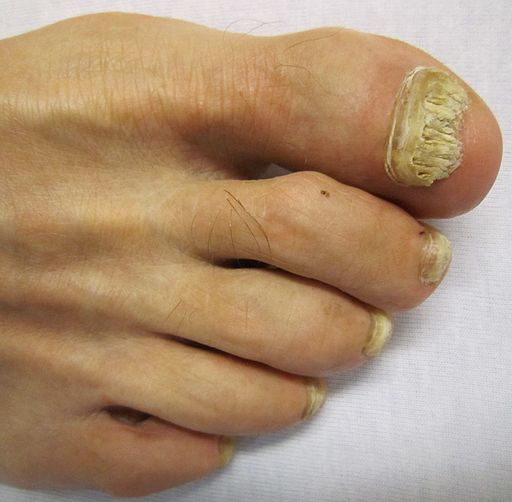
3. Corns (Heloma Duram)
Corns are small, hard areas of skin that develop in response to pressure or friction. In podiatry we call them heloma durum, and they are especially common in older adults whose skin has thinned and whose feet may have developed bony prominences.
In care homes, corns often form on the tops and sides of toes or on the soles of the feet where footwear rubs or weight is unevenly distributed. Although small, they can cause intense pain — like walking with a stone in your shoe. For residents, this can make even short distances difficult, increasing the risk of reduced mobility and falls.
Left untreated, corns can press deeper into the skin, sometimes leading to ulceration — particularly dangerous for those with diabetes or poor circulation.
How do we treat it?
Podiatrists can safely and painlessly remove corns using specialist instruments. Unlike over-the-counter “corn plasters,” which can damage fragile elderly skin, podiatry treatment is precise and safe. Ongoing care may also include advice on footwear, pressure relief, and skin care to prevent recurrence.
Fungal Nails (Onychomycosis)
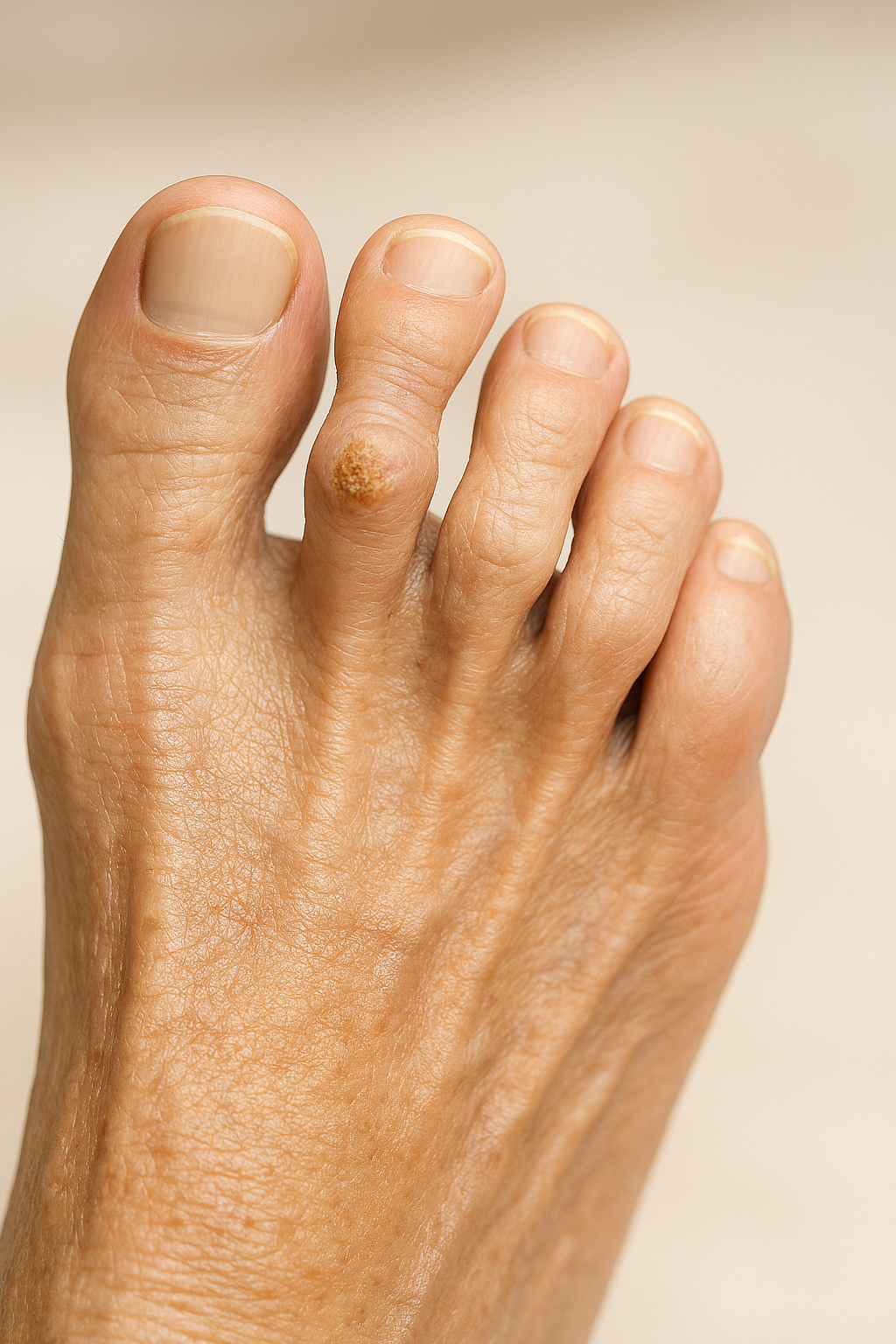
Fungal nail infections, or onychomycosis, are another very common problem in care homes. They often start as a small discolouration but can quickly spread, causing the nail to become thick, crumbly, and brittle.
Older adults are more vulnerable to fungal infections because of reduced circulation, weaker immune systems, and difficulty keeping feet clean and dry. In a care home setting, infections can easily be overlooked until the nails are significantly affected.
While fungal nails aren’t always painful, they can cause embarrassment, make shoes uncomfortable, and lead to secondary problems such as ingrown nails or skin infections. For some residents, particularly those with diabetes or frailty, even a “mild” fungal infection can be the start of something more serious.
How do we treat it?
Podiatrists can thin down fungal nails to reduce discomfort and prevent further damage. Antifungal treatments — topical or oral — may be recommended depending on the severity, though these are not suitable for everyone. Regular podiatry visits help to keep the infection under control, improve nail appearance, and reduce the risk of complications. Good hygiene and advice on footwear and socks can also support longer-term management.
5. Pressure Ulcers to heels (Posterior Calcaneal ulcerations)
Pressure ulcers, sometimes called “bed sores,” are one of the most serious foot problems we see in care homes. The heel is a particularly high-risk area because it bears pressure when a resident spends long periods in bed or sitting in a chair.
A posterior calcaneal ulceration develops when constant pressure reduces blood supply to the skin and underlying tissue. For frail or immobile residents, even a few hours of unrelieved pressure can cause damage. Once an ulcer forms, it can be extremely painful, slow to heal, and carries a high risk of infection — in severe cases, leading to hospital admission or even amputation.
These ulcers are devastating for residents and represent a major challenge for care homes. They can also be distressing for families and staff, as they are often preventable with the right care and vigilance.
How do we treat it?
Prevention is key. Podiatrists play an essential role in identifying at-risk residents, advising on pressure relief, and ensuring regular foot checks. For those already affected, treatment may involve wound care, offloading devices, specialist dressings, and close collaboration with the wider healthcare team. Early recognition and referral are critical to avoid serious complications.
Conclusion
The five conditions outlined above are not rare, unusual, or inevitable — they are predictable, manageable, and in many cases preventable. Yet without regular podiatry input, they can quickly escalate into pain, reduced mobility, increased falls risk, infection, and avoidable hospital admissions.
Good foot care in care homes isn’t about cosmetic treatments or ticking boxes. It’s about comfort, dignity, safety, and keeping residents mobile for as long as possible. When podiatry is provided consistently, residents don’t miss care, problems are identified early, and outcomes are significantly better.
At Care Home Podiatry Ltd, we work alongside care homes to ensure residents receive the foot care they need — not as a luxury, but as an essential part of their overall wellbeing. Because when feet are looked after properly, the difference it makes to a resident’s day-to-day life can be profound. Want to know more about the services we offer? Check our packages page on our website.
Want to know more about Podiatry and foot care in care homes? Check out our earlier 3 part blog on foot care in care homes or our recent article on funding for foot care in care homes.